These two letters make a complete sentence: No.
When I was growing up, my mom had lots of self-helpy books on her shelf. The middle school me never picked them up, but some of the titles stuck in my brain. For…
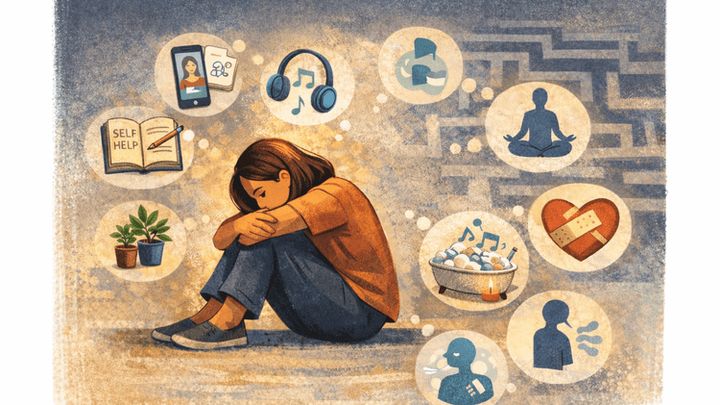
You’ve done the breathing exercises, the journaling, the grounding techniques. You know how to calm your body in the moment. But lately, it feels like those tools aren’t enough. You’re still anxious. Still emotionally flat. Still stuck in patterns you thought you’d outgrown.
That doesn’t mean you’re doing it wrong. It may mean you’ve reached a deeper layer of your experience, one that strategies alone can’t fully reach.
You can name your triggers. You practice mindfulness. You’ve learned box breathing, progressive muscle relaxation, and how to reframe an unhelpful thought. Maybe a therapist taught you grounding exercises, and you use them. You read the books and follow the therapist accounts online.
And if you work in a helping job, you may teach these same skills to other people all day.
And yet…
There’s still this weight. A kind of emotional flatness. A sense that you’re going through the motions while something deeper stays untouched. You’re managing symptoms, but you don’t feel different.
You haven’t failed at coping. You may simply be ready for something more than symptom management. Plenty of thoughtful, high-functioning people who’ve done all the “right” things end up here. If that’s you, you’re in good company.
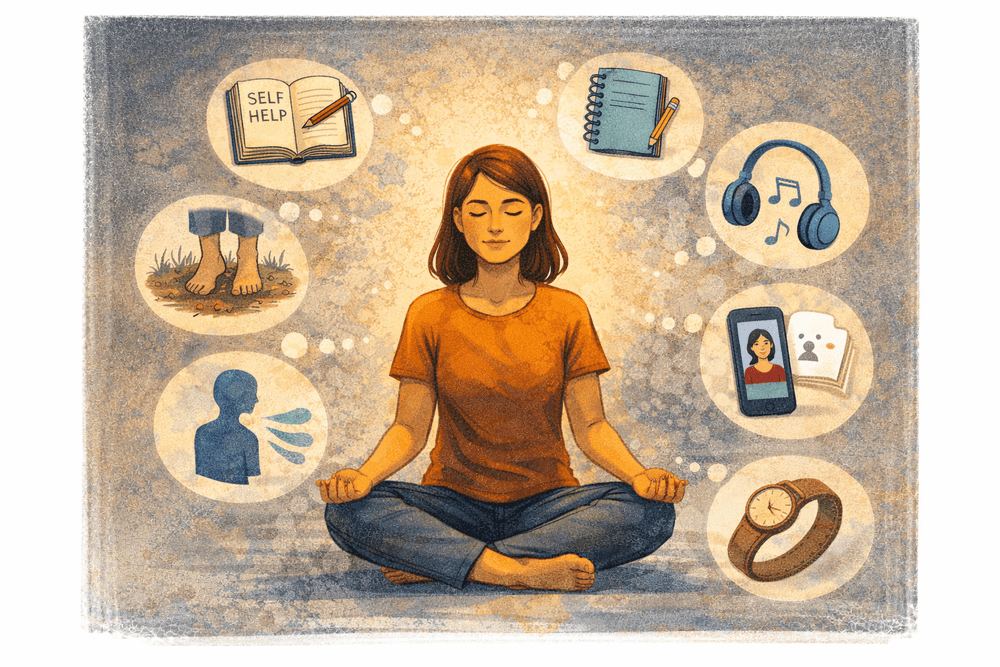
Coping skills matter. They help calm your nervous system, interrupt spirals, and keep you functioning when things are hard. Keep using them. (The Wellness On-Demand library is full of them for a reason.)
What coping skills are good for:
Getting through moments of emotional overwhelm
Staying grounded during panic or shutdown
Keeping things steady in the short term
Giving you some control when emotions feel chaotic
What they don’t necessarily do on their own:
Change the underlying patterns that keep distress coming back
Heal old relationship or family wounds
Shift deep beliefs about your worth, safety, or identity
Here’s where I want to be honest: skills-based therapies like CBT and DBT are well researched and help a lot of people, and for some problems they’re exactly the right fit. The question isn’t whether skills are good. It’s whether skills are what you need right now.
Learning coping strategies can feel like progress. But when they become the only focus, a few patterns tend to show up:
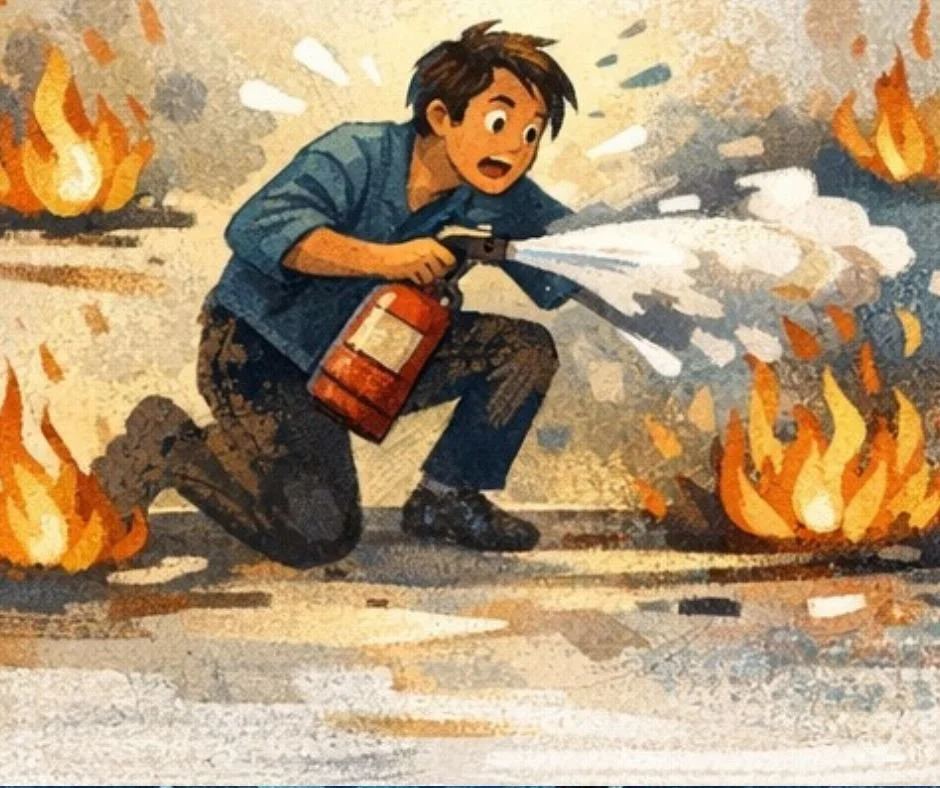
1. You’re constantly putting out fires.
You settle yourself moment to moment, but the bigger patterns keep coming back.
2. You’re managing feelings instead of feeling them.
Some strategies ease discomfort but can quietly turn into ways of avoiding feelings that need attention.
3. Your core beliefs stay the same.
You may understand your anxiety intellectually, while your body still reacts as if the old threat is happening now.
4. Insight doesn’t equal change.
You’re reflective and self-aware, and the same patterns keep repeating anyway.
None of this is failure. These are clues about what kind of help might fit next.
You might be ready to go beyond coping skills if:
You’ve learned the tools, but the symptoms stick around
Managing your emotional state feels like a full-time job
You feel like you’re performing your life instead of living it
You’re self-aware but stuck in the same patterns
You feel disconnected even when things are “fine”
You want to understand yourself, not just feel less bad
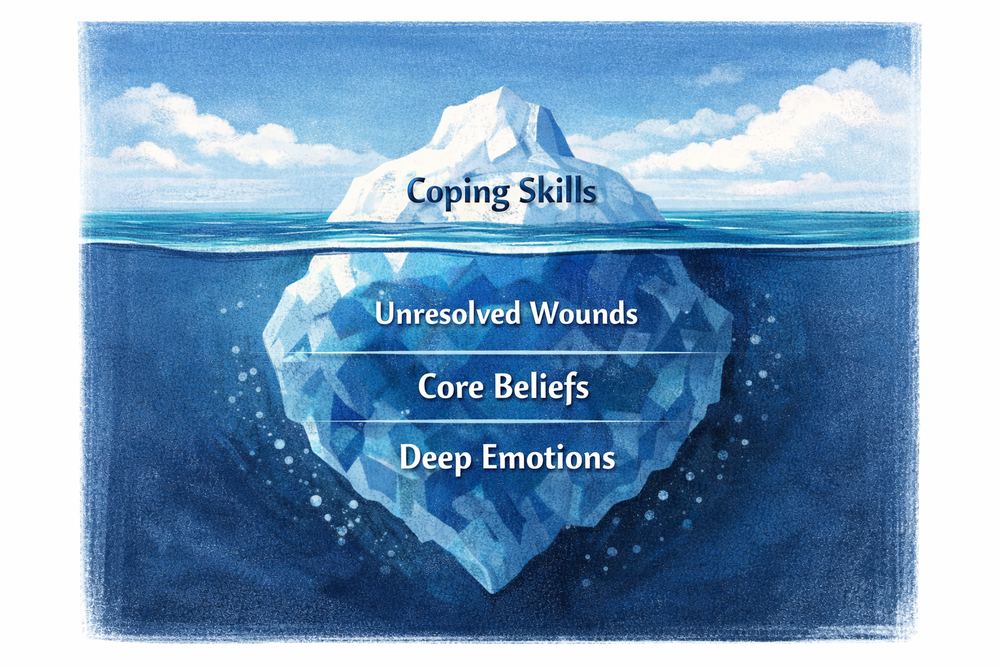
When therapists talk about “going deeper,” they usually mean approaches that focus on understanding your patterns and relationships, not just easing symptoms. Relational, psychodynamic, and integrative therapies are a few examples.
Instead of focusing only on what you’re feeling, this work looks at why the patterns exist and how they formed. It might involve questions like:
What were you taught about your needs and emotions?
What parts of yourself did you learn to hide to stay safe?
What keeps showing up in your relationships, and why?
What beliefs about yourself no longer fit?
This isn’t endless rehashing of the past. The goal is to understand how your history shapes your present, so you can make different choices.
It’s not quick, and progress isn’t a straight line. There is research behind it, though. A widely cited review in American Psychologist found that the benefits of psychodynamic therapy tend to last, and sometimes keep growing, after treatment ends (Shedler, 2010).
In my experience, people who do this kind of work often notice:
More ability to sit with discomfort without shutting down
Relationships that feel more honest and two-way
Less inner fighting about being “too much” or “not enough”
Boundaries that come from self-respect instead of fear
A growing ability to rest and trust themselves
Life doesn’t become easy. It just starts to feel less like a battle against yourself.
Often they still work for what they were built for: getting through hard moments. If the same struggles keep coming back, it may be a sign that the patterns underneath need attention too.
No. Coping skills and deeper work go together. Many people keep using their skills day to day while they explore the bigger patterns in therapy.
When you reach out to a provider, ask how they work and whether they focus on skills, patterns, or both. You can find a provider through the library, and if you’re in crisis, call or text 988.
If you’re craving something deeper than symptom management, you’re not alone, and you’re not asking for too much. There’s no one right way to do therapy. But for a lot of people, understanding their own patterns changes things in a way that coping strategies alone can’t.
When you’re ready, it’s okay to ask for that kind of help.
Bailey C. Bryant, Psy.D. is the Founder and Steward of Hello Mental Health, a group therapy practice in Cincinnati, Ohio.
This post is for general education only. It isn’t therapy, medical advice, or a diagnosis. For care that fits your situation, talk with a licensed provider. If you’re in crisis, call or text 988.
When I was growing up, my mom had lots of self-helpy books on her shelf. The middle school me never picked them up, but some of the titles stuck in my brain. For…

You’ve been wondering whether therapy might be right for you. Maybe things feel a little harder than usual, or you’ve been carrying the same worries for longer than…

Workplace burnout is a legitimate phenomenon recognized by the World Health Organization, and in Eagle Hill Consulting’s 2025 Workforce Burnout Survey, 55% of U.S…