How Do I Know When It's Time to Start Therapy?
You’ve been wondering whether therapy might be right for you. Maybe things feel a little harder than usual, or you’ve been carrying the same worries for longer than…
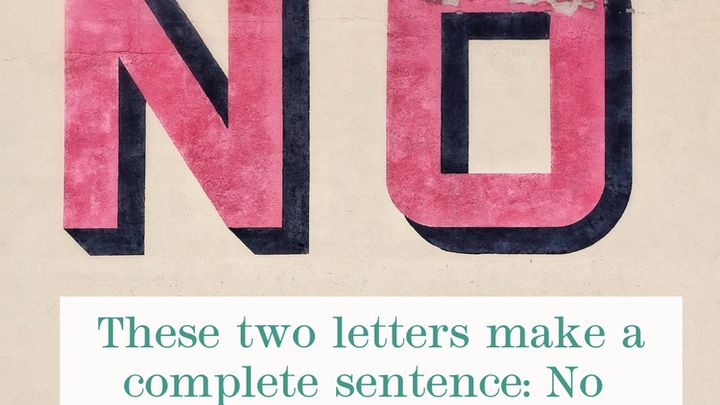
When I was growing up, my mom had lots of self-helpy books on her shelf. The middle school me never picked them up, but some of the titles stuck in my brain. For the past few weeks, I’ve noticed a trend in sessions that keeps bringing one of them to mind: When I Say No, I Feel Guilty by Manuel J. Smith (1975). (This is not a book recommendation. I still haven’t actually read it.)
Why is it so hard to say “no”? That tiny, two-letter word can hold a lot of power in our lives, and yet we hesitate to use it all the time. So let’s talk about why saying “no” is hard, why it matters for your well-being, and how to do it.

It’s a very human dilemma, and one I fall into as much as the next person. A few of the most common reasons:
We want to be liked. Saying “yes” can feel like a way to avoid rejection or disapproval.
We like helping. Making other people happy feels good, so we agree even when it doesn’t fit our lives right now.
We want to avoid conflict. “Yes” can feel like the fastest way to keep the peace.
We feel guilty or obligated. We think we “should” say yes because it’s expected, even when it isn’t good for us.
We overestimate our capacity. We agree to one more thing, then another, and end up overwhelmed.
Culture and setting play a role. In some families, cultures, and workplaces, “no” can come across as rude or uncooperative. And if you never got to practice saying it, it makes sense that it feels awkward now.

Here’s the good news. Saying “no” when you need to can give you a lot back:
Time and energy for the people and commitments that matter most to you
Less stress, because you’re not spread so thin
Room for your relationships, since every “yes” to something less important takes time from someone who matters
More confidence, because each time you honor a limit, it gets a little easier to trust yourself
A good example for the people around you, who may need permission to set limits too
Saying “no” is really about making choices that line up with your well-being and values, so that your “yes” means something.
At work, “no” isn’t always an option, and that’s real. Sometimes it sounds more like, “I can take that on, but something else will have to wait. Which is the priority?” Naming your limits and asking for help setting priorities is still a boundary, and in helping jobs it’s part of how you keep doing the work over the long haul.

Be clear and direct. A short, polite answer works better than a long, vague one.
You don’t owe a long explanation. A brief reason is fine if you want to give one. As the Mayo Clinic puts it, “no is a complete sentence.”
Offer an alternative if you want to. “I can’t do Friday, but I could help next week.”
Use “I” statements. “I can’t commit to this right now” lands better than “You’re asking too much.”
Give yourself time. If you’re unsure, it’s okay to say, “Let me think about it and get back to you.”
Be kind to yourself afterward. Guilt often shows up right after a “no,” and that doesn’t mean you did something wrong. The Self-Compassion Break can help in those moments.
Is it selfish to say no?
Setting limits is how you make sure you have something left to give. Most people respect a clear, kind “no” more than a reluctant “yes.”
Why do I feel guilty after saying no?
If you learned early that keeping others happy was your job, guilt can show up even when your “no” is completely reasonable. The feeling usually gets quieter the more you practice.
When is it worth talking to someone?
If saying “no” feels impossible, brings up intense fear, or keeps leading to burnout or resentment, a therapist can help you understand where that comes from and practice something different. You can find a provider through the library.
The next time you’re stuck between “yes” and “no,” remember that you get to choose what’s best for you. You might be surprised by what that small word makes room for.
Michelle Maegly, Psy.D. is the Clinical Director of Hello Mental Health in Cincinnati, Ohio.
This post is for general education only. It isn’t therapy, medical advice, or a diagnosis. For care that fits your situation, talk with a licensed provider. If you’re in crisis, call or text 988.

You’ve been wondering whether therapy might be right for you. Maybe things feel a little harder than usual, or you’ve been carrying the same worries for longer than…

Workplace burnout is a legitimate phenomenon recognized by the World Health Organization, and in Eagle Hill Consulting’s 2025 Workforce Burnout Survey, 55% of U.S…

How chronic stress and carrying everyone else wear you down, even when life looks “fine.” A lot of people I see in therapy don’t describe themselves as anxious or…