Why You Feel Guilty When You Rest (And What to Do About It)
Spoiler: It’s not a personal failing. It’s an alliance of forces working against you. A client sits across from me and describes their week. They’re exhausted…

How chronic stress and carrying everyone else wear you down, even when life looks “fine.”
A lot of people I see in therapy don’t describe themselves as anxious or depressed. They’re functioning. They’re working. They show up for everyone. On paper, everything looks fine.
And yet…
They feel a kind of tired that sleep, vacations, or a weekend off doesn’t touch.
If that sounds familiar, it doesn’t mean you’re weak or failing. More often it means you’ve been running in survival mode for a long time, and that takes a toll.
Capable, competent people often describe it like this:
“I don’t know why I’m this tired…nothing is technically wrong.”
“I get things done, but I feel empty.”
“I look like I have it together, but I’m running on fumes.”
“Everyone thinks I’m fine, but I’m barely holding on.”
Being high-functioning doesn’t mean you’re well. Your exhaustion makes sense.

High-functioning means you’ve learned to keep going even when it’s draining you. You show up, you follow through, you handle what’s in front of you. What you may not have is any room left over for yourself.
For a lot of people, that skill started early. Maybe you grew up in a home where:
Your needs came second (or not at all)
You had to manage other people’s emotions
Showing vulnerability didn’t feel safe
Being “good” meant making yourself small
Or maybe your work asked for competence before you felt ready for it. If your job is caring for people in crisis, that pressure can be the whole shift.
So you learned to anticipate what others need, keep the peace, stay calm when you’re stretched thin, and keep going when your body wants to stop. Those skills got you through. They just weren’t built to last forever.
And because you look fine, people assume you are fine. Sometimes you assume it too. A more useful question than “What’s wrong with me?” is “What has my system been managing for so long that it never got a chance to rest?”
This is the part that confuses people. I haven’t had a crisis or a major loss… so why am I this tired?

Stress isn’t only the big emergencies. A steady hum of pressure, day after day, costs real energy. If you’re always on alert at work, anticipating other people’s needs, managing emotions (yours and theirs), and avoiding conflict, it wears on you over time.
The National Institute of Mental Health notes that ongoing stress can take a toll on both physical and mental health, including sleep and mood.
Many high-functioning people are finely tuned to everyone around them. You notice when someone’s mood shifts, adjust to keep things smooth, and hold back your own reactions so others stay comfortable.
Sociologist Arlie Hochschild coined the term emotional labor in 1983 to describe this kind of effort on the job. It’s a real skill, and it makes you a strong support for other people. It also uses up energy you don’t always get back.
Resting doesn’t automatically reset you. Even when you lie down, the part of you that’s used to scanning for problems doesn’t just switch off.
So you might sleep and still wake up tired, take time off and still feel tense, or sit still while your mind keeps running.
Your system learned that staying alert keeps you okay. Letting go of that is hard, even when it’s costing you, and it has nothing to do with being lazy. Small, repeated signals can help your body get the message that the day is over, like an end-of-shift ritual.
Exhaustion is information. Often it’s your body saying something like:
“I’ve been carrying too much for too long.”
“I can’t let my guard down.”
“Something needs to change.”
“I’m running on reserves that aren’t refilling.”
None of that is a reason to be hard on yourself. It’s a reason to pay attention.

More coping tools usually aren’t the answer here. Therapy can help you understand why your system stays in survival mode, and what would help it ease up.
That might look like:
Understanding why your nervous system stays switched on
Naming the emotional load you carry
Seeing your survival strategies for what they are
Building room for real rest, beyond just time off
Noticing patterns instead of only managing symptoms
This kind of change is gradual. Your system didn’t get this way overnight, and it doesn’t have to shift overnight either.
If your body has been on alert for a long time, sleep alone may not feel restoring. Ongoing fatigue can also have medical causes, like sleep problems, thyroid issues, or anemia, so it’s worth bringing up with your doctor too.
They can look alike, and sometimes they overlap. Is It Burnout or Depression? walks through the differences, and a licensed provider can help you sort out what’s going on for you.
If the tiredness has lasted a few weeks, is getting in the way of work or relationships, or rest isn’t helping, that’s a good time. You can find a provider, take the free Self-Check, or start with your own doctor. If you’re in crisis, call or text 988.
You don’t have to wait until you collapse to ask for help. You’re allowed to rest before everything is handled.
Bailey C. Bryant, Psy.D. is the Founder and Steward of Hello Mental Health, a group therapy practice in Cincinnati, Ohio.
This post is for general education only. It isn’t therapy, medical advice, or a diagnosis. For care that fits your situation, talk with a licensed provider. If you’re in crisis, call or text 988.
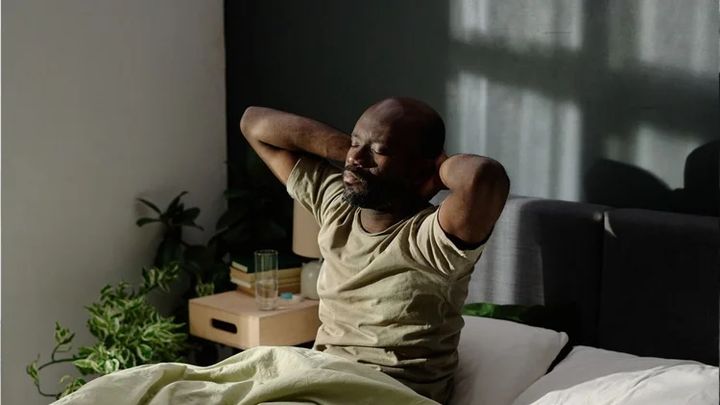
Spoiler: It’s not a personal failing. It’s an alliance of forces working against you. A client sits across from me and describes their week. They’re exhausted…

And why that doesn’t mean something is wrong with you. You go to therapy. You know your coping skills. You exercise, or at least you try to. You’re self-aware…
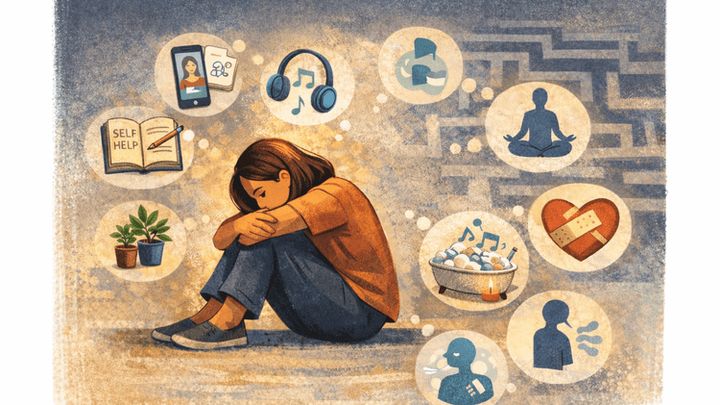
You’ve done the breathing exercises, the journaling, the grounding techniques. You know how to calm your body in the moment. But lately, it feels like those tools…